The N-LITE project, funded by the Interreg Northern Periphery and Arctic Programme, reached its conclusion in Galway, Ireland, where partners from across the Northern Periphery and Arctic region gathered to celebrate three years of collaboration. The final symposium brought together tourism organizations, cultural institutions, artists, researchers and technology developers from Ireland, Finland, Norway, Sweden and the Faroe Islands to explore how storytelling, culture and digital technologies can create new visitor experiences.
Representing Finland at the event was the game development team Clever Simulation from the Kajaani University of Applied Sciences (KAMK). Within the N-LITE project, the team’s role was to explore how literary stories and cultural heritage can be transformed into interactive digital experiences that encourage visitors to actively participate in the stories they encounter.
Stories, Culture and Technology Meet in Galway
The Galway symposium showcased the remarkable diversity of cultures represented within the N-LITE partnership. Throughout the event, participants experienced performances, presentations and demonstrations that highlighted the unique literary and cultural traditions of the Northern Periphery and Arctic regions.
One particularly memorable moment came from the Faroe Islands, where participants were introduced to Faroese storytelling traditions through music and performance. A live vocal performance by a Faroese singer illustrated how songs and stories remain deeply connected to the islands’ cultural identity. The performance served as a reminder that storytelling exists in many forms, not only through books and written narratives, but also through music, oral traditions and shared cultural experiences.
These performances provided a fitting backdrop for discussions about how digital technologies can help preserve, share and reimagine cultural heritage for future generations.
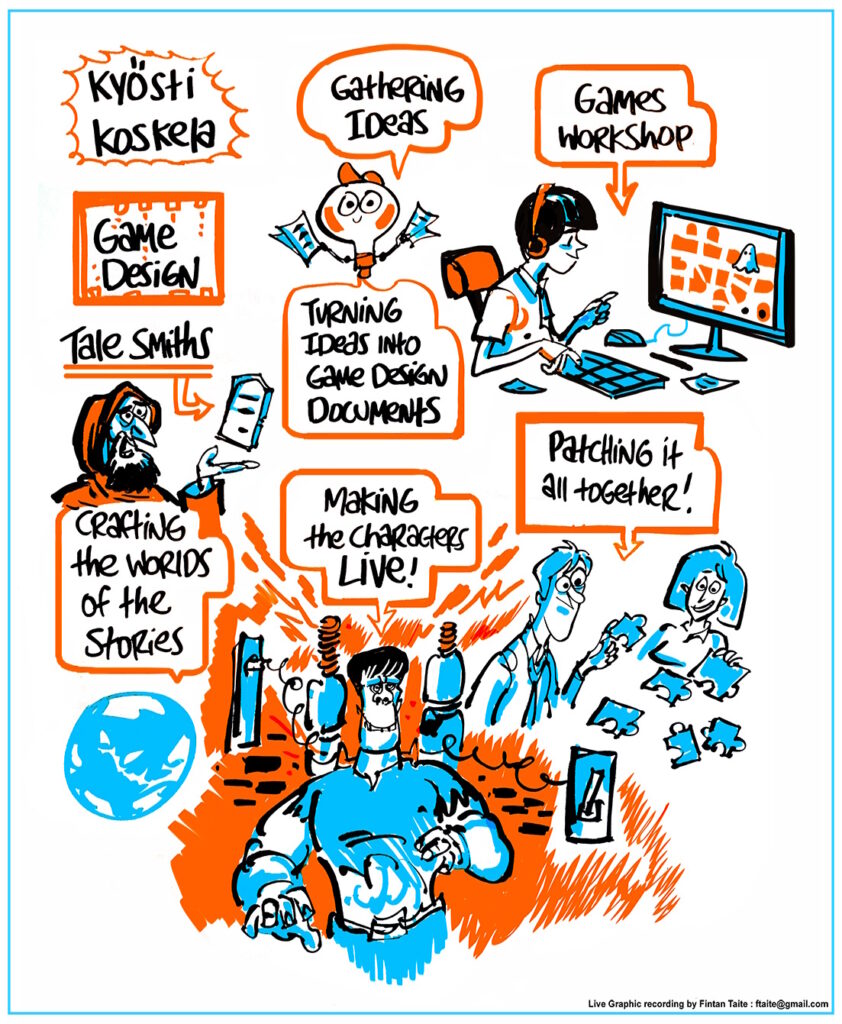
A local artist visually captured the key ideas and discussions of each presentation through live illustrations.
Turning Stories into Interactive Experiences
Throughout the project, the Clever Simulation team explored how game development methodologies can be applied to literary tourism. The result was Tale Smiths, an interactive storytelling experience designed to transform stories, locations and cultural narratives into engaging digital adventures.
Rather than simply presenting information to visitors, the goal was to allow users to become active participants. Players explore environments inspired by literary locations, uncover clues, interact with characters and experience stories in a way that encourages curiosity and discovery.
This approach is familiar territory for Clever Simulation. At KAMK, the team has spent more than a decade developing serious games and immersive simulations for healthcare, industry and public organizations. While literary tourism differs from many of the team’s previous projects, the underlying challenge remains remarkably similar: how can information be transformed into an engaging experience that people genuinely want to explore?
The answer often lies in interaction. People tend to remember experiences far better than facts alone, and games provide unique opportunities to combine storytelling, exploration and discovery into a single experience.
What Game Development Can Bring to Cultural Heritage
Traditional tourism often positions visitors as observers. Interactive technologies provide opportunities to move beyond observation and towards participation.
Through game mechanics, immersive environments and digital storytelling techniques, visitors can experience locations and stories in ways that are difficult to achieve through conventional exhibitions or guided tours alone. Rather than reading about a historical event, users can explore its setting. Rather than viewing a location from the outside, they can become part of the narrative.
For game developers, cultural heritage presents an interesting challenge. The goal is not simply entertainment but finding the balance between authenticity and compelling player experiences. Achieving this requires close collaboration between cultural experts, tourism organizations, artists, writers and technology developers.
The N-LITE project demonstrated how valuable this collaboration can be. Historians, tourism professionals, writers, performers and developers each brought their own perspective, helping to create experiences that respect local heritage while remaining accessible to modern audiences.
Games as a New Form of Media
One topic that emerged throughout the Galway discussions was how cultural stories are communicated to modern audiences. Books, theatre, music, film and museums all play an important role in preserving and sharing cultural heritage. Yet games are still often overlooked in these conversations, despite being one of the world’s largest forms of media.
Part of this may be because games are relatively young compared to literature, theatre or film. They are frequently viewed primarily as entertainment rather than cultural experiences. However, games offer something unique. They allow people not only to observe a story but to actively participate in it.
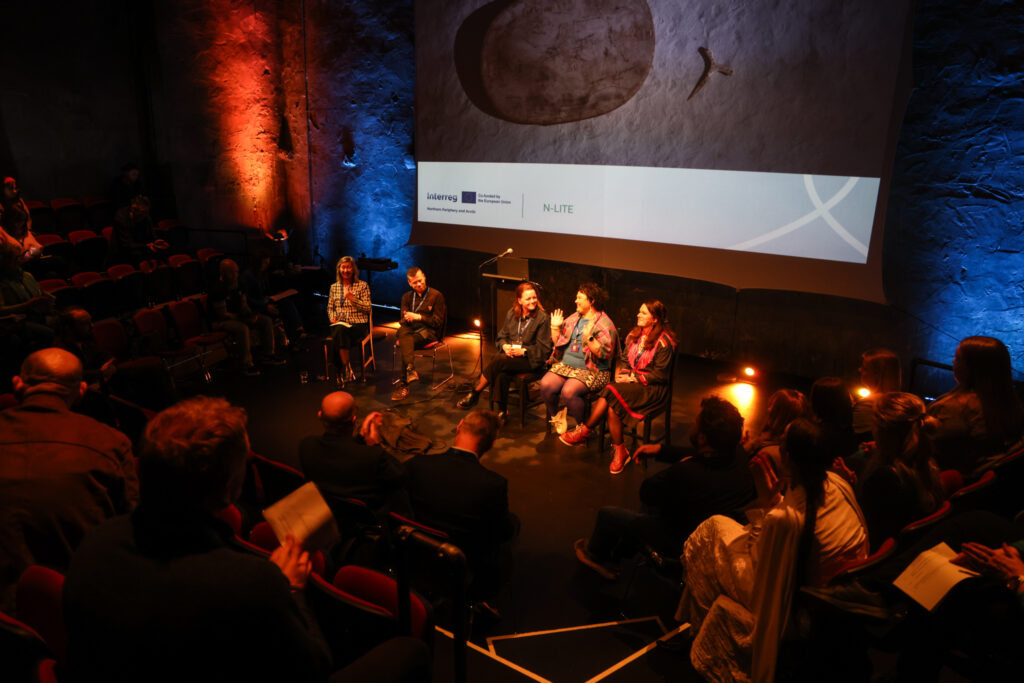
Panel on how emerging forms of media can help bring new audiences to traditional cultural content.
For projects such as N-LITE, this distinction is important. Many people who may never read a particular novel, visit a museum exhibition or attend a cultural performance are willing to explore those same stories through interactive experiences. Games do not replace traditional forms of storytelling. They complement them by reaching audiences that might otherwise remain untouched.
The Tale Smiths project provides an interesting example of this potential. Available globally through Steam, the game has already been acquired by more than 20,000 users and has generated over 70,000 visits through Steam’s discovery systems. For a project focused on literary tourism and cultural heritage, these figures demonstrate that digital distribution platforms can provide access to audiences far beyond the geographical regions where the stories originate.
What makes this particularly interesting is that many of these players may have had no previous connection to the Kalevala, Faroese storytelling traditions, Irish literary heritage or Sámi culture. Through interactive storytelling, they encounter these traditions in a format that feels natural to them. In many ways, games have become a modern gateway to culture, history and literature.
As cultural institutions continue to explore new ways of engaging audiences, it may be time to view games not merely as entertainment, but as a legitimate cultural medium alongside books, theatre, film and music.
Looking Beyond the Final Chapter
The Galway symposium marked the official conclusion of the N-LITE project, but it also demonstrated the growing potential of immersive storytelling within tourism, education and cultural heritage sectors.
For KAMK and the Clever Simulation team, the project offered valuable opportunities to collaborate with international partners and explore new ways of applying game development expertise outside traditional learning environments. The experiences shared in Galway reinforced the idea that stories become more meaningful when people are given the opportunity to actively participate in them.
Whether through a Sámi joik, a Faroese song, a literary trail or an interactive digital experience, storytelling continues to connect people, cultures and places. Projects such as N-LITE demonstrate that digital technologies do not replace these traditions. They provide new ways to experience and share them.
The project may have reached its final chapter, but the journey of transforming stories into playable worlds is only beginning.
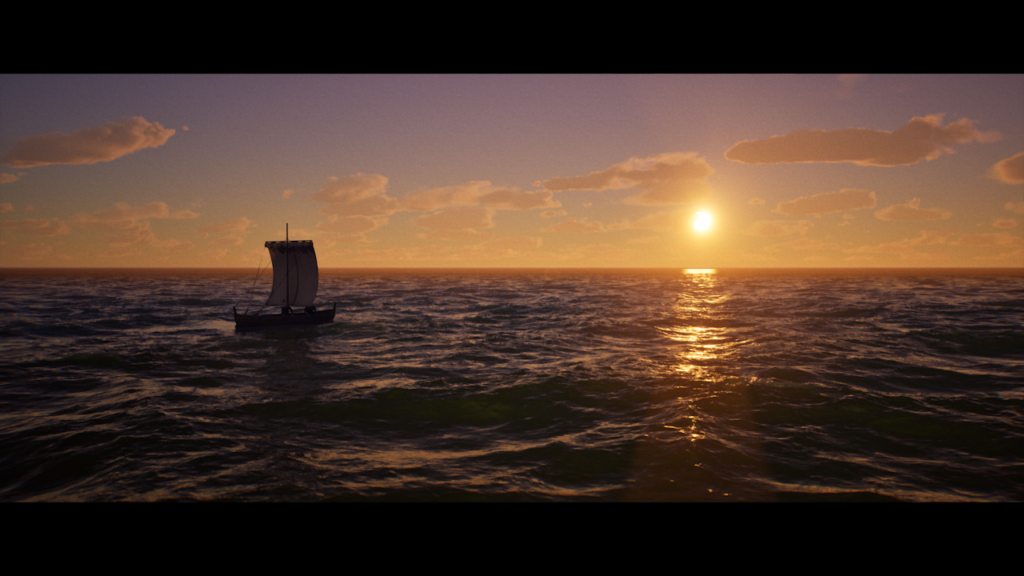
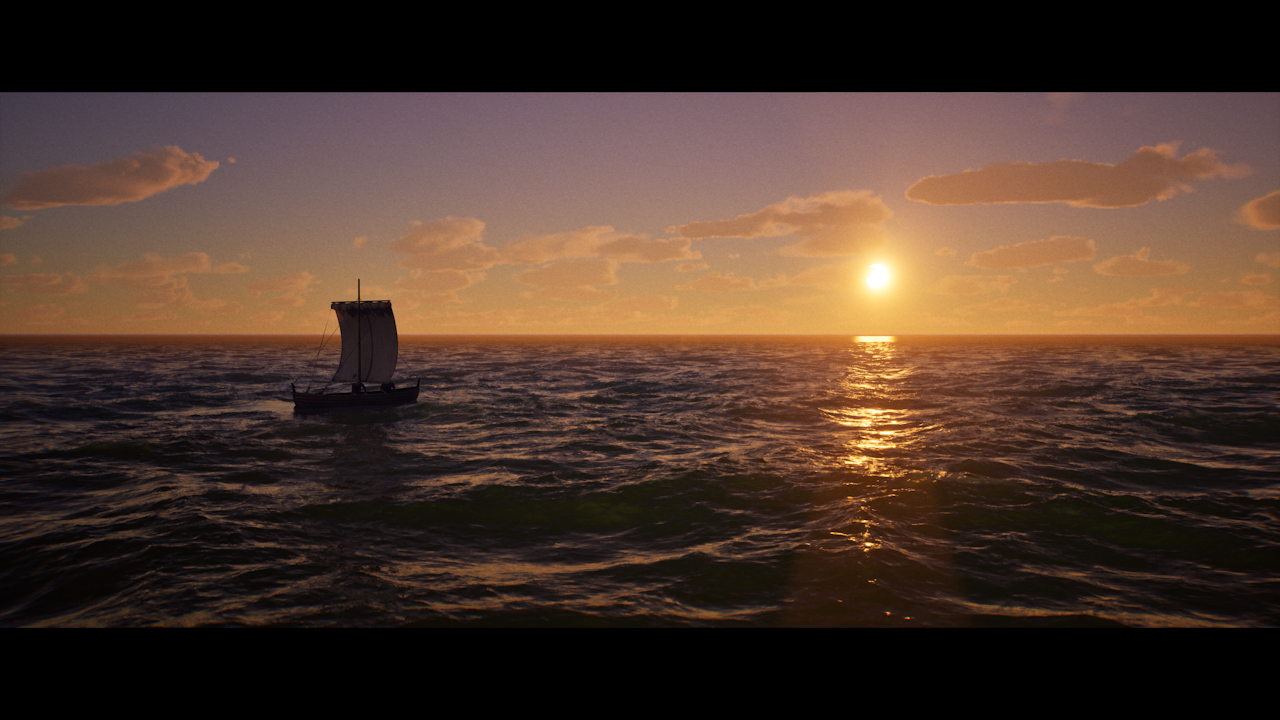
A scene from Tale Smiths, highlighting the bright future of interactive media in preserving and sharing cultural heritage.
Symposium information: https://www.interreg-npa.eu/projects/n-lite/home/news-events/n-lite-final-symposium/
Tale Smiths on Steam: https://store.steampowered.com/app/3160560/Tale_Smiths/