
The essence of universities lies in education, research, and innovation. Most faculty members both teach and participate in various research and development (R&D) projects. The role of R&D projects in universities is significant, as they generate new knowledge that informs both the content and the methods of teaching. Additionally, research and development work produces innovations that are essential for enhancing sustainable organizations and societies.
At the Kajaani University of Applied Sciences (KAMK), students have the opportunity to participate in faculty members’ research and development projects, for example by working on their thesis within such a project. From an educational perspective, faculty members’ own R&D projects are important because they provide opportunities and an authentic foundation for implementing inquiry-based learning in higher education (Brew, 2003). The challenge, however, is how to strengthen student–faculty collaboration and make it more effective throughout the different stages of R&D projects. Enhanced collaboration could benefit all parties by enriching learning and fostering the development of new ideas and innovations.
Academic Communities of Practice: Where Learning Meets Innovation
Brew (2003) suggests that better integration of research and education can be achieved through the adoption of an approach based on academic communities of practice. Communities of practice can be defined “as groups of people bound together by a common activity, shared expertise, a passion for a joint enterprise, and a desire to learn or improve their practice” (Nicolini et al., 2022, p. 680). The concept was originally proposed by Lave and Wenger (1991), whose key insight was that learning takes place through engagement in social practice. They emphasised that learning is part of everyday activities and is inherently social. This means that becoming a competent practitioner requires interaction with practitioners at different stages of skill and expertise — beginners, more advanced practitioners, and highly experienced experts. In universities, this translates into closer interaction between students, faculty members, and organizational representatives, for example, within the framework of research and development projects.
In addition to learning, communities of practice also serve as a locus for innovation. Collaboration among practitioners strengthens both individual expertise and the group’s collective competence, making communities of practice a powerful means of fostering learning and innovation in real-world contexts. Nicolini et al. (2022, p. 685) summarise that existing research has highlighted communities of practice as sites for facilitating and circulating knowledge, modifying and improving work practices, generating ideas, solving problems, and sharing innovative concepts across organizational boundaries.
Engaging Students in R&D: Building Stronger Partnerships
The development of academic communities of practice, where students learn through active participation in faculty members’ R&D projects, can be challenging. According to Healey (2005), it requires curriculum designs that focus on better engaging students in various forms of investigation. Such curriculum revisions may create innovative opportunities for staff and students to work together, encouraging mutual exploration and the co-production of knowledge. In other words, students learn and become active participants in research and development processes in close collaboration with faculty members.
Academic communities of practice, where students act as active participants, also require negotiating new relationships between teachers and students. Brew (2003) emphasises that instead of a one-way flow of knowledge from teacher to student, academic communities of practice encourage a partnership model in which both parties engage in research and development processes together. Teachers act more as facilitators or co-investigators, guiding students in exploring questions, gathering evidence, and constructing knowledge. This collaboration fosters mutual learning, shared responsibility, and a sense of belonging to an academic community. It also challenges faculty members to adapt their roles and teaching methods, promoting a more interactive, participatory, and student-centred learning environment.
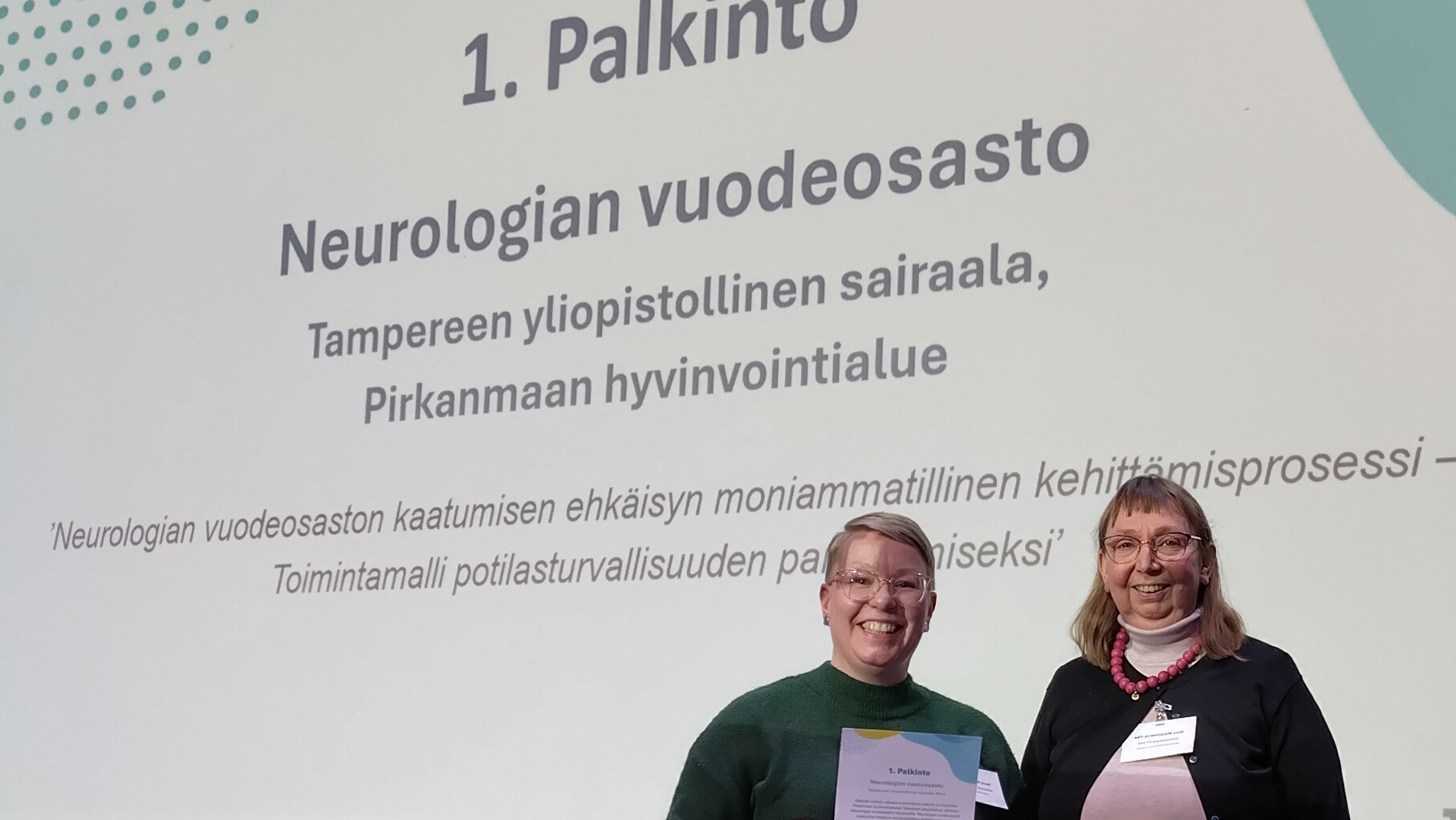
At KAMK, one step towards a partnership model is already in place. In Social and Health Care Master’s theses, the thesis supervisor participates in steering group meetings organised and led by the thesis student within their own organisation. The topics of these theses mainly arise from the research and development needs of the students’ own organisations rather than from faculty members’ R&D projects. However, the steering groups serve as important forums for mutual learning and co-development between the student, supervisor, and the contracting organisation. At best, this type of collaboration can lead to successful research and development work and innovations.
References
Brew, A. (2003). Teaching and research: New relationships and their implications for inquiry-based teaching and learning in higher education. Higher education research & development, 22(1), 3-18.
Healy, M. (2005). Linking research and teaching: Exploring disciplinary spaces and the role of inquiry-based learning. In: Barnett, R (ed) (2005) Reshaping the University: New Relationships between Research, Scholarship and Teaching, McGraw Hill / Open University Press, pp. 67-78.
Lave, J., & Wenger, E. (1991). Situated learning: Legitimate peripheral participation. Cambridge University Press.
Nevaharju-Sarantis, L. (2025). Kaatumisten systemaattisen ehkäisemisen kehittäminen sairaalaympäristössä. YAMK-opinnäytetyö. Tiedolla johtaminen sosiaali- ja terveydenhuollon kehittämisessä. Kajaanin ammattikorkeakoulu. https://www.theseus.fi/handle/10024/898416
Nicolini, D., Pyrko, I., Omidvar, O., & Spanellis, A. (2022). Understanding communities of practice: Taking stock and moving forward. Academy of Management Annals, 16(2), 680-718.